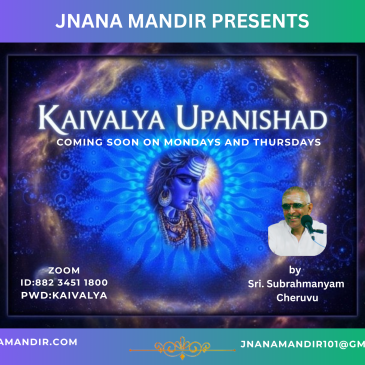
The Kaivalya Upanishad belongs to the Atharva Veda and is counted among the Yoga Upanishads — a group of texts that deal directly with the nature of liberation and the practices that lead to it. The word kaivalya means absolute aloneness or independence — not loneliness, but the recognition that the Self stands alone, complete in itself, needing nothing outside to be whole. The text is short (about twenty-five verses) and moves quickly from a seeker’s questions to the highest teaching.
The Upanishad opens with the sage Ashvalayana approaching Brahma and asking how the highest can be known. Brahma’s answer is the heart of the text: not through ritual, not through wealth, not through offspring, but through renunciation, devotion to the teacher, and sustained meditation on the Self. The teaching that follows describes Brahman as self-luminous awareness — the witness of all experiences, present in the waking state, the dream state, and deep sleep, yet not limited by any of them.
What makes the Kaivalya Upanishad distinctive is the warmth of its tone. Unlike some of the more technical Upanishads, this one reads almost like a direct conversation between a compassionate teacher and a sincere student. It is often recommended as a first Upanishad for those new to Vedanta, because its language is clear, its structure is simple, and its teaching — that you are already what you seek — is stated without unnecessary complexity.
| 8/24/26 |
 JNANA MANDIR