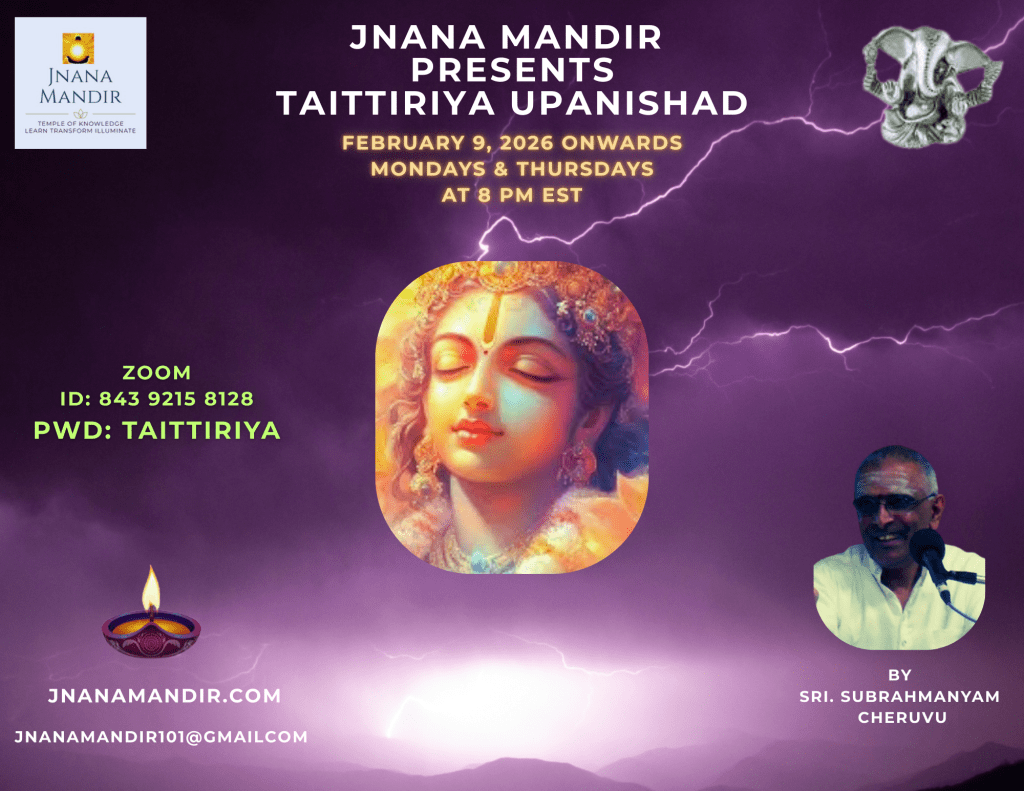
The Taittiriya Upanishad is a principal Vedantic text from the Krishna Yajur Veda that explores the nature of ultimate reality (Brahman), the self (Atman), and the path to bliss (Ananda). It gets its name from the sage Tittiri and is renowned for defining Brahman as Satyam, Jnanam, Anantam (Truth, Knowledge, Infinity) and detailing the Panchakosha (five sheaths) model of human existence.
The Upanishad is divided into three sections called Vallis: Shikshavalli, Brahmananda Valli, and Bhrigu Valli.
Shikshavalli (Discipline): Focuses on education, phonetics, and ethical rules, including the famous convocation address instructing students to “Speak the truth, follow Dharma”.
Brahmananda Valli (Bliss of Brahman): Defines the Supreme Being and outlines the Panchakosha (five sheaths) that conceal the true self:
- Annamaya (Food/Physical sheath).
- Pranamaya (Vital energy sheath).
- Manomaya (Mental sheath).
- Vijnanamaya (Intellectual sheath).
- Anandamaya (Bliss sheath).
Bhrigu Valli (Self-Knowledge): Narrates Sage Bhrigu’s journey of understanding Brahman through self-inquiry, moving from identifying Brahman as matter to realizing it as Bliss.

Discourses:
 JNANA MANDIR